

Calcium Hydroxide Strong Or Weak
 | |
 | |
| Names | |
|---|---|
| IUPAC proper name Calcium hydroxide | |
Other names
| |
| Identifiers | |
| CAS Number |
|
| 3D model (JSmol) |
|
| ChEBI |
|
| ChemSpider |
|
| ECHA InfoCard | 100.013.762 |
| EC Number |
|
| Eastward number | E526 (acerbity regulators, ...) |
| Gmelin Reference | 846915 |
| KEGG |
|
| PubChem CID |
|
| RTECS number |
|
| UNII |
|
| CompTox Dashboard (EPA) |
|
| InChI
| |
| SMILES
| |
| Properties | |
| Chemic formula | Ca(OH)two |
| Molar mass | 74.093one thousand/mol |
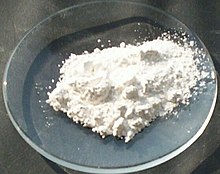
| Appearance | White powder |
| Odor | Odorless |
| Density | two.211g/cm3, solid |
| Melting point | 580 °C (one,076 °F; 853 1000) (loses h2o, decomposes) |
| Solubility in h2o |
|
| Solubility product (K sp) | 5.02×10−half dozen [1] |
| Solubility |
|
| Acidity (pK a) | 12.63 (showtime OH−), 11.57 (second OH−)[2] [3][ clarification needed ] |
| Magnetic susceptibility (χ) | −22.0·10−6 cmiii/mol |
| Refractive alphabetize (n D) | ane.574 |
| Structure | |
| Crystal structure | Hexagonal, hP3[4] |
| Infinite group | P3m1 No. 164 |
| Lattice constant | a = 0.35853nm, c = 0.4895nm |
| Thermochemistry | |
| Std molar | 83 J·mol−ane·Yard−1 [5] |
| Std enthalpy of | −987 kJ·mol−1 [5] |
| Hazards | |
| GHS labelling: | |
| Pictograms |   |
| Bespeak give-and-take | Danger |
| Take chances statements | H314, H335, H402 |
| Precautionary statements | P261, P280, P305+P351+P338 |
| NFPA 704 (fire diamond) | 3 0 0 |
| Flash point | Non-flammable |
| Lethal dose or concentration (LD, LC): | |
| LDfifty (median dose) | 7340mg/kg (oral, rat) 7300mg/kg (mouse) |
| NIOSH (Us health exposure limits): | |
| PEL (Permissible) | TWA fifteenmg/miii (total) 5mg/m3 (resp.)[7] |
| REL (Recommended) | TWA 5mg/miii [7] |
| IDLH (Firsthand danger) | N.D.[vii] |
| Safe data sheet (SDS) | [6] |
| Related compounds | |
| Other cations | Magnesium hydroxide Strontium hydroxide Barium hydroxide |
| Related bases | Calcium oxide |
| Supplementary data page | |
| Calcium hydroxide (data page) | |
| Except where otherwise noted, information are given for materials in their standard state (at 25 °C [77 °F], 100 kPa). Infobox references | |


Calcium hydroxide (traditionally called slaked lime) is an inorganic compound with the chemical formula Ca(OH)ii. Information technology is a colorless crystal or white pulverization and is produced when quicklime (calcium oxide) is mixed or slaked with water. It has many names including hydrated lime, caustic lime, builders' lime, slaked lime, cal, and pickling lime. Calcium hydroxide is used in many applications, including food preparation, where it has been identified as E number E526. Limewater, likewise called milk of lime, is the mutual name for a saturated solution of calcium hydroxide.
Properties [edit]
Calcium hydroxide is poorly soluble in water with a retrograde solubility increasing from 0.66 m/L at 100 °C to 1.89 g/L at 0 °C. With a solubility production M sp of five.02×10−6 at 25 °C[1] [ clarification needed ], its dissociation in water is large enough that its solutions are basic co-ordinate to the following dissolution reaction:
- Ca(OH)two → Ca2+ + 2 OH−
At ambient temperature, calcium hydroxide (portlandite) dissolves in pure water to produce an alkaline solution with a pH of well-nigh 12.5. Calcium hydroxide solutions can crusade chemical burns. At high pH value due to a mutual-ion event with the hydroxide anion OH −
, its solubility drastically decreases. This behavior is relevant to cement pastes. Aqueous solutions of calcium hydroxide are called limewater and are medium-forcefulness bases, which reacts with acids and can assault some metals such every bit aluminium (amphoteric hydroxide dissolving at high pH), while protecting other metals, such as iron and steel, from corrosion past passivation of their surface. Limewater turns milky in the presence of carbon dioxide due to germination of calcium carbonate, a procedure called carbonatation:
- Ca(OH)2 + CO2 → CaCO3 + H2O
When heated to 512 °C, the fractional pressure of water in equilibrium with calcium hydroxide reaches 101kPa (normal atmospheric pressure), which decomposes calcium hydroxide into calcium oxide and water:[8]
- Ca(OH)2 → CaO + H2O
Structure, preparation, occurrence [edit]

SEM image of fractured hardened cement paste, showing plates of calcium hydroxide and needles of ettringite (micron scale)
Calcium hydroxide adopts a polymeric structure, as do all metal hydroxides. The structure is identical to that of Mg(OH)ii (brucite construction); i.e., the cadmium iodide motif. Strong hydrogen bonds exist between the layers.[9]
Calcium hydroxide is produced commercially past treating lime with water:
- CaO + HtwoO → Ca(OH)2
In the laboratory information technology can be prepared by mixing aqueous solutions of calcium chloride and sodium hydroxide. The mineral form, portlandite, is relatively rare but can be found in some volcanic, plutonic, and metamorphic rocks. It has also been known to ascend in burning coal dumps.
The positively charged ionized species CaOH+ has been detected in the temper of S-type stars.[10]
Retrograde solubility [edit]
Co-ordinate to Hopkins and Wulff (1965),[11] the subtract of calcium hydroxide solubility with temperature was known since the works of Marcellin Berthelot (1875)[12] and Julius Thomsen (1883)[13] (meet Thomsen–Berthelot principle), when the presence of ions in aqueous solutions was still questioned. Since, it has been studied in detail by many authors, a.o., Miller and Witt (1929)[xiv] or Johnston and Grove (1931)[15] and refined many times (e.g., Greenberg and Copeland (1960);[16] Hopkins and Wulff (1965);[xi] Seewald and Seyfried (1991);[17] Duchesne and Reardon (1995)[18]).
The reason for this rather uncommon behavior is that the dissolution of calcium hydroxide in water is an exothermic process. Thus, according to Le Chatelier's principle, a lowering of temperature favours the elimination of the estrus liberated through the procedure of dissolution and increases the equilibrium constant of dissolution of Ca(OH)two, and so increase its solubility at low temperature. This counter-intuitive temperature dependence of the solubility is referred to as "retrograde" or "inverse" solubility. The variably hydrated phases of calcium sulfate (gypsum, bassanite and anhydrite) likewise exhibit a retrograde solubility for the aforementioned reason considering their dissolution reactions are exothermic.
Uses [edit]
Calcium hydroxide is commonly used to prepare lime mortar.
One significant application of calcium hydroxide is every bit a flocculant, in h2o and sewage treatment. It forms a fluffy charged solid that aids in the removal of smaller particles from water, resulting in a clearer product. This application is enabled by the low price and low toxicity of calcium hydroxide. It is also used in fresh-h2o treatment for raising the pH of the water so that pipes volition non corrode where the base water is acidic, because it is cocky-regulating and does not raise the pH too much.
It is also used in the preparation of ammonia gas (NH3), using the following reaction:
- Ca(OH)2 + ii NHivCl → ii NHthree + CaCl2 + two HiiO
Some other large awarding is in the paper manufacture, where it is an intermediate in the reaction in the production of sodium hydroxide. This conversion is office of the causticizing step in the Kraft process for making pulp.[ix] In the causticizing functioning, burned lime is added to light-green liquor, which is a solution primarily of sodium carbonate and sodium sulfate produced by dissolving smelt, which is the molten form of these chemicals from the recovery furnace.
In orchard crops, calcium hydroxide is used as a fungicide. Applications of 'lime h2o' prevent the evolution of cankers caused by the fungal pathogen Neonectria galligena. The trees are sprayed when they are dormant in winter to prevent toxic burns from the highly reactive calcium hydroxide. This use is authorised in the European Union and the Uk under Bones Substance regulations.[19]
Food manufacture [edit]
Because of its low toxicity and the mildness of its basic properties, slaked lime is widely used in the nutrient manufacture:
- In USDA certified food production in plants and livestock[20]
- To clarify raw juice from sugarcane or saccharide beets in the carbohydrate industry, (encounter carbonatation)
- To procedure water for alcoholic beverages and soft drinks
- Pickle cucumbers and other foods
- To brand Chinese century eggs
- In maize preparation: removes the cellulose hull of maize kernels (see nixtamalization)
- To clear a alkali of carbonates of calcium and magnesium in the manufacture of salt for nutrient and pharmaceutical uses
- In fortifying (Ca supplement) fruit drinks, such as orange juice, and babe formula
- As a digestive aid (called Choona, used in Republic of india in paan, a mixture of areca nuts, calcium hydroxide and a diversity of seeds wrapped in betel leaves)
- As a substitute for baking soda in making papadam
- In the removal of carbon dioxide from controlled atmosphere produce storage rooms
- In the grooming of mushroom growing substrates[21]
Native American uses [edit]

Dry untreated maize (left), and treated maize (right) later humid in water with calcium hydroxide (xvml, or 1tbsp, lime for 500g of corn) for fifteen minutes
In Nahuatl, the linguistic communication of the Aztecs, the word for calcium hydroxide is nextli. In a process called nixtamalization, maize is cooked with nextli to get nixtamal , also known as hominy. Nixtamalization significantly increases the bioavailability of niacin (vitamin B3), and is also considered tastier and easier to assimilate. Nixtamal is often basis into a flour, known as masa, which is used to make tortillas and tamales.
In chewing coca leaves, calcium hydroxide is normally chewed aslope to keep the alkaloid stimulants chemically available for absorption by the trunk. Similarly, Native Americans traditionally chewed tobacco leaves with calcium hydroxide derived from burnt mollusc shells to enhance the effects. It has too been used past some indigenous American tribes as an ingredient in yopo, a psychedelic snuff prepared from the beans of some Anadenanthera species.[22]
Asian uses [edit]
Calcium hydroxide is typically added to a package of areca nut and betel leaf chosen "paan" to keep the alkaloid stimulants chemically available to enter the bloodstream via sublingual absorption.
It is used in making naswar (also known as nass or niswar), a type of dipping tobacco fabricated from fresh tobacco leaves, calcium hydroxide (chuna or presently), and forest ash. It is consumed most in the Pathan diaspora, Afghanistan, Pakistan, India and Bangladesh. Villagers also use calcium hydroxide to paint their mud houses in Afghanistan, Islamic republic of pakistan and Republic of india.
Health risks [edit]
Unprotected exposure to Ca(OH)two tin can cause astringent skin irritation, chemical burns, blindness, lung impairment or rashes.[6]
See also [edit]
- Baralyme (carbon dioxide absorbent)
- Cement
- Lime mortar
- Lime plaster
- Plaster
- Magnesium hydroxide (less alkaline due to a lower solubility production)
- Soda lime (carbon dioxide absorbent)
- Whitewash
References [edit]
- ^ a b John Rumble (18 June 2018). CRC Handbook of Chemistry and Physics (99 ed.). CRC Press. pp. five–188. ISBN978-1138561632.
- ^ "Sortierte Liste: pKb-Werte, nach Ordnungszahl sortiert. – Das Periodensystem online".
- ^ ChemBuddy dissociation constants pKa and pKb
- ^ Petch, H. E. (1961). "The hydrogen positions in portlandite, Ca(OH)2, equally indicated by the electron distribution". Acta Crystallographica. 14 (nine): 950–957. doi:10.1107/S0365110X61002771.
- ^ a b Zumdahl, Steven Due south. (2009). Chemical Principles 6th Ed. Houghton Mifflin Company. p. A21. ISBN978-0-618-94690-7.
- ^ a b "MSDS Calcium hydroxide" (PDF). Archived from the original (PDF) on 25 March 2012. Retrieved 21 June 2011.
- ^ a b c NIOSH Pocket Guide to Chemic Hazards. "#0092". National Institute for Occupational Safety and Health (NIOSH).
- ^ Halstead, P. Eastward.; Moore, A. East. (1957). "The Thermal Dissociation of Calcium Hydroxide". Journal of the Chemical Lodge. 769: 3873. doi:x.1039/JR9570003873.
- ^ a b Greenwood, Due north. North.; & Earnshaw, A. (1997). Chemistry of the Elements (second Edn.), Oxford:Butterworth-Heinemann. ISBN 0-7506-3365-four.
- ^ Jørgensen, Uffe 1000. (1997), "Cool Star Models", in van Dishoeck, Ewine F. (ed.), Molecules in Astrophysics: Probes and Processes, International Astronomical Wedlock Symposia. Molecules in Astrophysics: Probes and Processes, vol. 178, Springer Science & Business Media, p. 446, ISBN079234538X.
- ^ a b Hopkins, Harry P.; Wulff, Claus A. (1965). "The solution thermochemistry of polyvalent electrolytes. I. Calcium hydroxide". The Periodical of Physical Chemical science. 69 (1): 6–8. doi:ten.1021/j100885a002. ISSN 0022-3654.
- ^ Berthelot, Yard. (1875). Dissolution des acides et des alcalis. [Dissolution of acids and alkalis]. In: Annales de Chimie et de Physique. Vol. iv, pp. 445–536.
- ^ Thomsen J. (1883). Thermochemische untersuchungen [Thermochemical studies]. Vol. Iii, Johann Ambrosius Barth Verlag, Leipzig.
- ^ Miller, L. B.; Witt, J. C. (1929). "Solubility of calcium hydroxide". The Journal of Concrete Chemistry. 33 (2): 285–289. doi:10.1021/j150296a010. ISSN 0092-7325.
- ^ Johnston, John.; Grove, Clinton. (1931). "The solubility of calcium hydroxide in aqueous salt solutions". Journal of the American Chemical Society. 53 (xi): 3976–3991. doi:10.1021/ja01362a009. ISSN 0002-7863.
- ^ Greenberg, S. A.; Copeland, L. East. (1960). "The thermodynamic functions for the solution of calcium hydroxide in water". The Journal of Concrete Chemistry. 64 (eight): 1057–1059. doi:10.1021/j100837a023. ISSN 0022-3654.
- ^ Seewald, Jeffrey S.; Seyfried, William Due east. (1991). "Experimental decision of portlandite solubility in H2O and acetate solutions at 100–350 °C and 500 bars: Constraints on calcium hydroxide and calcium acetate complex stability". Geochimica et Cosmochimica Acta. 55 (3): 659–669. Bibcode:1991GeCoA..55..659S. doi:10.1016/0016-7037(91)90331-10. ISSN 0016-7037.
- ^ Duchesne, J.; Reardon, Eastward.J. (1995). "Measurement and prediction of portlandite solubility in brine solutions". Cement and Concrete Research. 25 (five): 1043–1053. doi:10.1016/0008-8846(95)00099-Ten. ISSN 0008-8846.
- ^ European Union (thirteen May 2015). "Commission IMPLEMENTING REGULATION (European union) 2015/762 of 12 May 2015 approving the basic substance calcium hydroxide in accordance with Regulation (EC) No 1107/2009 of the European Parliament and of the Council concerning the placing of plant protection products on the market, and amending the Annex to Committee Implementing Regulation (EU) No 540/2011". Retrieved 12 May 2022.
- ^ Pesticide Research Found for the USDA National Organic Programme (23 March 2015). "Hydrated Lime: Technical Evaluation Report" (PDF). Agriculture Marketing Services . Retrieved 17 July 2019.
- ^ "Grooming of Mushroom Growing Substrates". North American Mycological Association. North American Mycological Clan. Retrieved viii July 2021.
- ^ de Smet, Peter A. G. 1000. (1985). "A multidisciplinary overview of intoxicating snuff rituals in the Western Hemisphere". Periodical of Ethnopharmacology. 3 (one): three–49. doi:10.1016/0378-8741(85)90060-1. PMID 3887041.
External links [edit]
- National Lime Association. "Properties of typical commercial lime products. Solubility of calcium hydroxide in h2o" (PDF). lime.org . Retrieved xviii June 2021.
- National Organic Standards Board Technical Informational Panel (4 April 2002). "NOSB TAP Review: Calcium Hydroxide" (PDF). Organic Materials Review Plant. Archived from the original (.PDF) on 31 October 2007. Retrieved 5 February 2008.
- CDC – NIOSH Pocket Guide to Chemical Hazards – Calcium Hydroxide
- MSDS Data Sheet

Calcium Hydroxide Strong Or Weak,
Source: https://en.wikipedia.org/wiki/Calcium_hydroxide
Posted by: brownmach1936.blogspot.com
0 Response to "Calcium Hydroxide Strong Or Weak"
Post a Comment